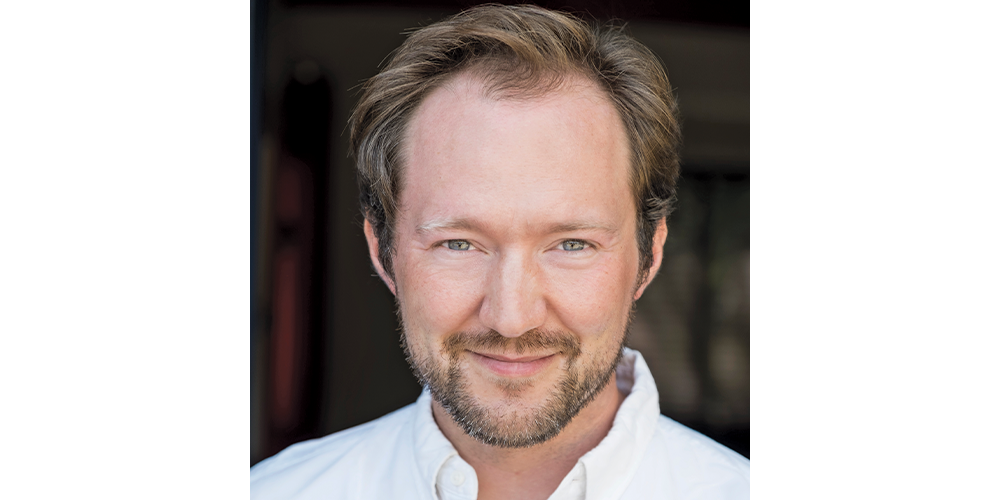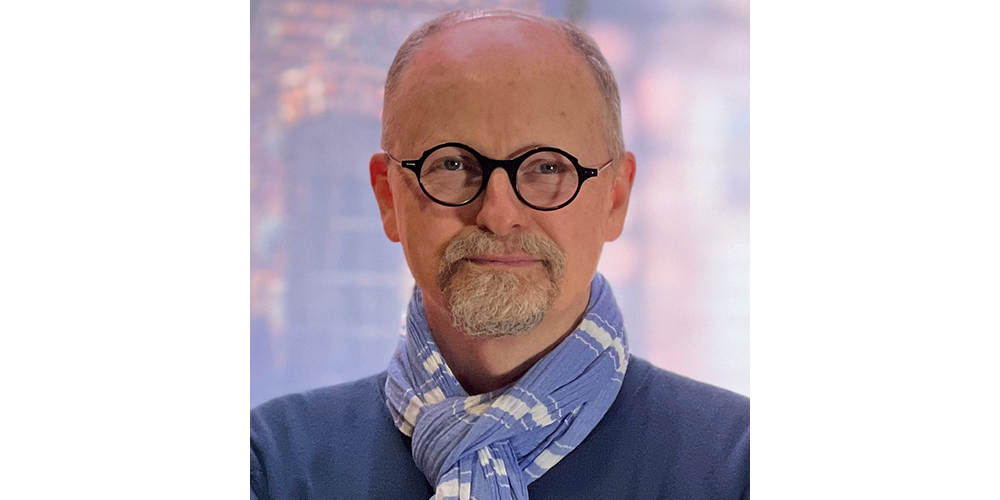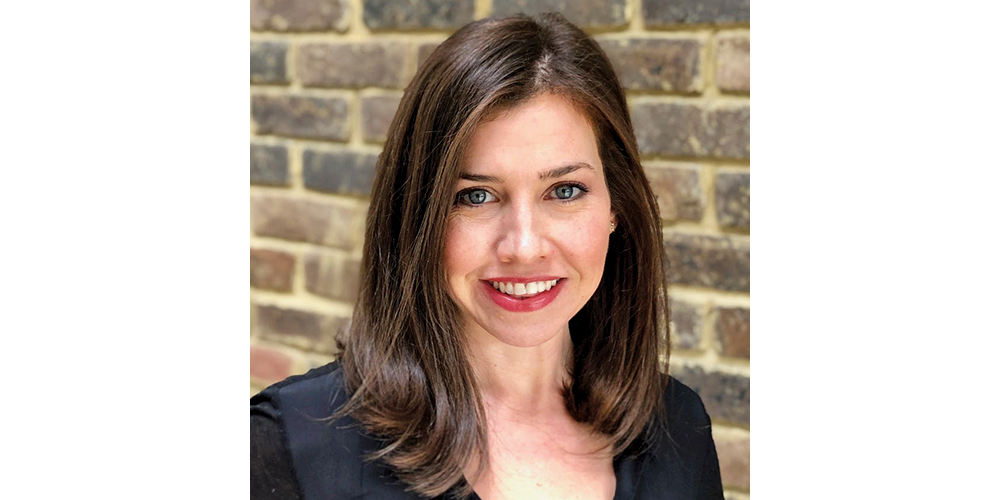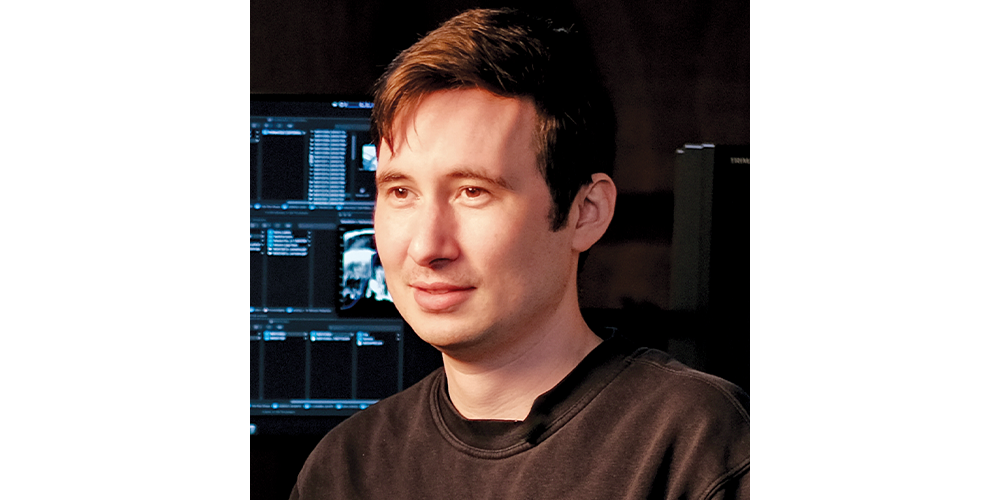

Over dinner, Televisual discussed how film and drama will be made in the future. AI featured throughout the discussion, whether for script, audience research, visualisation or even the choice of which film or drama might be made. Thank you to Thomas Hoegh for hosting this discussion at his Notting Hill home. James Bennett reports
THOMAS HOEGH Imagine the following.
Your AI tool can be the best new VFX artist you’ve ever met. They can use all the same tools as humans do.
TRACY MCCREARY Creatives like to iterate. And the iterations still need to be driven, and creative choices still need to be made. AI can cut a lot of the processing. I have a really difficult time believing that it can be the best, new, greatest ‘artist’ that you’ve ever met. It’s only going to be as good as the prompts that are entered into it. There still needs to be somebody behind the scenes making those decisions and choices, and then how flexible is it going to be?
TOM MITCHELL What’s to stop a director just prompting an AI to say can you have a bit more smoke?
There are people who are building text prompts to USD* files. You then build a basic 3D scene, and then you feed back into the file. You’ll maybe have text to video in a scene, but I think it won’t be too long before you can then continue to build and extrapolate from there.
We will eventually get to the stage where it will be text to movie. And once we start doing ‘text to movie’ the AI will learn what you want to watch, and then it will give you suggestions.
[*USD – Pixar developed a tool called Universal Scene Description which enables the iterative stages within VFX (like 3D modelling or light tracing) to be brought together within one process where artists can work simultaneously on different elements of the VFX or animation sequence.]
THOMAS HOEGH What we see today is pretty good tools for previz and storyboarding. You can do simple images. And you can make them very consistent. And people are increasingly good at writing prompts. What gets me excited is the ability for proper artist-storytellers to take a step closer to their vision.
TRACY MCCREARY When you look back at the transition from film to digital. Yes, things changed dramatically but the number of productions didn’t decrease and increase. When I was in university, in my film programme, it was a palaver to get the equipment, to get the cameras, to rent the space and to put your project together. Now students make all the projects on iPhones. But that doesn’t mean that film has stopped. Projects are still being made on film. Just because you can do it doesn’t mean that you want to do it.
What is affordable and delivers the best result is ultimately going to win out. For example, I have a hard time believing that it is going to be cost-effective to create a background actor or day player performance in AI VFX rather than pay them for a few days’ work on set. Crowds and armies are different if you need 1000 bodies in a scene and can only afford 50 extras on the day, of course, VFX comes into play, but we have already been doing this type of work for at least a decade.
DANIEL-KONRAD COOPER Audiences do care about artistic integrity and do care about creative integrity. We do think about who’s directed the movies that we go and see.
When we go for a movie experience, we will notice if things don’t look right. A movie is only ever as strong as its weakest part. If it’s got terrible sound that’s the thing you notice and then it’s not a good movie.
If the studio starts leaning more heavily on technology to replace human artists and there are weaknesses there, audiences will be aware of those weaknesses. In all the processes we’re discussing, there’s human supervision, there’s an inputter issuing the prompts.
THE PRODUCTIVITY MULTIPLIER
THOMAS HOEGH In the last four months I’ve been working with a group of AI experts from my university. I’m on the board and they have given some of the board members the opportunity to interact with the people who are doing research on this.
We’ve been given an ongoing master class on how to figure out how to work with AI. How to make prompts. How do you create dialogue with AI. I had a very particular view on a story I wanted to make, and it helped me in all kinds of ways to tell that story. When they came up with ideas, I came up with counter arguments and it came up with other arguments in turn.
It accumulates your prompts. The response you give from probably ten takes the nine other ones into consideration in addition to whatever is in the data pool. It was so unique, almost frightening. I got to the bottom of some of the topics I wanted to talk about in a way which was so inspiring. It was almost like you had five of your smartest friends in the room. The five hours I spent was probably the equivalent of 50 hours or more with humans.
TOM MITCHELL AI is primarily a significant productivity multiplier. I’ve had the same experience recently when creating marketing materials. You’ve got this kind of person who you can bat ideas with. But it’s not a person. It’s AI. As a productivity multiplier. It was faster and 100% better than what I would have done on my own.
From the research I’ve seen, the use of AI isn’t just about productivity, it’s also about a significant increase in the quality of output. AI is better than humans at many tasks, particularly repetitive tasks.
We are gathering huge amounts of metrics on audience data. The difference between an algorithm and an AI is that an AI can detect trends way earlier than an algorithm, or way earlier than a human being.
Now as much as humans might say certain films won’t get made because only a human could come up with that, I’d argue that AI could probably come up with other alternative good ideas. And for every man-made film that’s a success a human, there will be a bunch of movies that are not.
If through trend analysis, an AI can identify hit films eight times out of ten and humans are doing it six out of ten, if you’re a shareholder you’re going to want that company to be using AI to start choosing those movies and be a taste maker. The people who are easiest to replace, are less so the VFX artists and more so the people who are choosing which movies are being made.
If you look at the film making process or in a post house how many people involved are truly creative? I would suggest that between 80 and 90% of the people are involved in the process and not the creative part. And eventually there’ll become a point, through automation and with AI as a multiplier, to connect all those dots.
TRACY MCCREARY I think that at BlueBolt probably a third are driving the creative process, and most work in procedural data management.
DANIEL-KONRAD COOPER I believe that everyone involved in our industry is drawn to the industry because they have creative instincts even if they don’t get to realise those creative aspirations on every project. I work between independent films and studios movies, and I would agree that on a studio movie it is 80 to 90% processing and a small group of people who steer the creative.
But, on an independent movie, I would turn that on its head and say that you can only get 10 or 20% of people to do process because people are subscribing to be part of a story and to be part of the story telling process. People are given more creative ownership of the film that is being created.
But if we only have department heads under AI – because the AI will need some supervision for the foreseeable future – across all departments, how do we train people to be department heads?
EVEN AI HAS ITS LIMITS
TOM MITCHELL We have a fundamental problem with AI in the longer term. If you end up leaning on AI to be creative, and you remove humans out of being creative, then you have what’s called the data cliff. Because AI can’t train on its own data, at the moment anyway, and it ends up breaking.
If there aren’t any university courses to do filmmaking, because there isn’t an industry that pays for it. And if you can’t do it full time as a job, you’re unlikely to perfect it as an artist, you hit a data cliff where AI doesn’t get any better, and it’s only an amalgamation of what was, everything that’s gone before.
DANIEL-KONRAD COOPER But have you already destroyed the industry by the time you’ve fallen off the data cliff?
TOM MITCHELL Which is why, as much as we’re angry at the actors for saying, “hey, slow down,” it does need to slow down, so that everybody else can catch up and realise that’s a problem.
What we’ve really got is machine learning right now. What is AI actually generating? It should be called regurgitating. AI is solely a generation of the amalgamation of its entire train set. Without the train set, there is no content out of it. There is nothing new that the AI algorithm brings into the piece. It’s literally a mosaic of everybody else’s work.
DANIEL-KONRAD COOPER I think there’s going to be a reckoning with this and because there was a social contract when people made content and AI didn’t exist. We expected our art to be used in this specific way. And now it’s being used in such a way that other people are making huge amounts of money without contributing.
THOMAS HOEGH I’m of the view that we’ve seen time and time again that people are willing to disregard the effort and value that artists have produced. The vast majority of YouTube presenters and artists make nothing. I think we find ourselves in the scenario where it’s just accelerated and so visible and so blatant.
That’s why people said something needs to happen. But I think most people out there, who are not in the industry don’t care. That doesn’t mean that they don’t necessarily want to see that things are genuine. I don’t think they necessarily want to see things that are reductive.
THE TECHNOLOGY UPSIDE
THOMAS HOEGH I am optimistic that people want to have genuine and well-told stories. What gives us hope is the sense that we’re going to be able to make amazing films for a quarter of the price. And I think the creative community’s going to become much more unified and more team orientated than being just part of a process.
DANIEL-KONRAD COOPER I think that we are naturally resistant to change and we fear shifts and alterations to our system. Even when we talk about our favourite movies, we tend to go back to how things used to be and the comfort that that brought.
I think that we’re very quick to look at what’s negative about the changing face of technology. But there are a lot of positives and there are ancillary positives that we won’t yet have identified.